Most people find their way to stem wave therapy the same way. A sore heel, elbow, or shoulder has been hanging around for months. Rest helped a little. Stretching helped a little. Maybe a cortisone shot was bought a few good weeks before the pain crept back.
Then a friend mentions StemWave, or an ad shows up in your feed, and the name alone raises questions. Is it a stem cell procedure? Does it actually work? Is it safe for someone like me?
This article answers those questions plainly, with input from Chirag D. Patel, MD, FACC, FSCAI, RPVI. He is the board-certified cardiologist who supervises StemWave Therapy at AvaOne, and he has also used it on his own shoulder.
What Is Stem Wave Therapy?
Stem wave therapy (StemWave) is a non-invasive treatment that delivers acoustic sound waves through the skin to areas of musculoskeletal pain. The waves improve blood flow to inflamed tissue, which helps the inflammation settle and eases pain. There are no needles, no incisions, and no medication involved.
Why It’s Called “StemWave”
The name is easy to misread. StemWave is a type of acoustic wave therapy, and it has nothing to do with stem cell procedures. Nothing is injected ortransplanted, and no cells are taken from your body.
Dr. Patel explains it to patients this way:
“StemWave uses acoustic wave technology to improve blood flow in the area of inflammation. That allows the inflammation to improve and helps relieve pain. StemWave does not involve the use of stem cells.”
- Chirag D. Patel, MD, FACC, FSCAI, RPVI
How Acoustic Wave Therapy Works
Shockwave technology entered medicine in the early 1980s as a way to break up kidney stones without surgery. Over the following years, researchers found that lower-energy acoustic waves had useful effects on tendons, fascia, and other soft tissue. Shockwave therapy became a recognized option for stubborn musculoskeletal pain. StemWave belongs to this same family of treatments.
The reasoning behind it is fairly intuitive. Tendons and fascia don’t get much blood supply, which is a big part of why injuries there drag on for so long. Acoustic waves create a mechanical stimulus in the tissue, and the body responds by increasing circulation to the area. Better blood flow helps inflammation calm down, and pain tends to ease as it does. Some research also suggests the waves can temporarily dampen the pain signals coming from irritated nerve endings.
None of this happens overnight. The body’s response builds gradually, which is why StemWave is planned as a course of treatment over several weeks.
What Happens During a StemWave Session
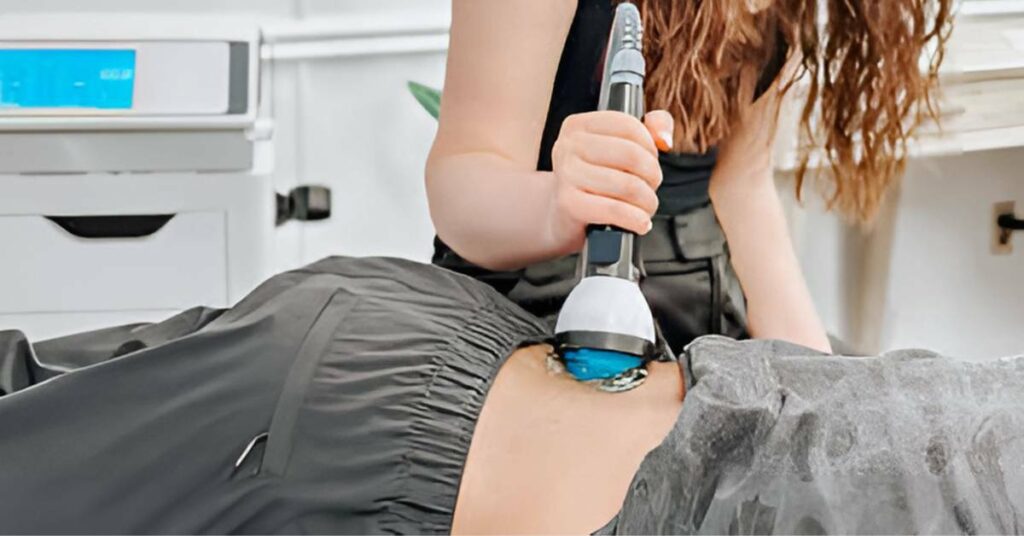
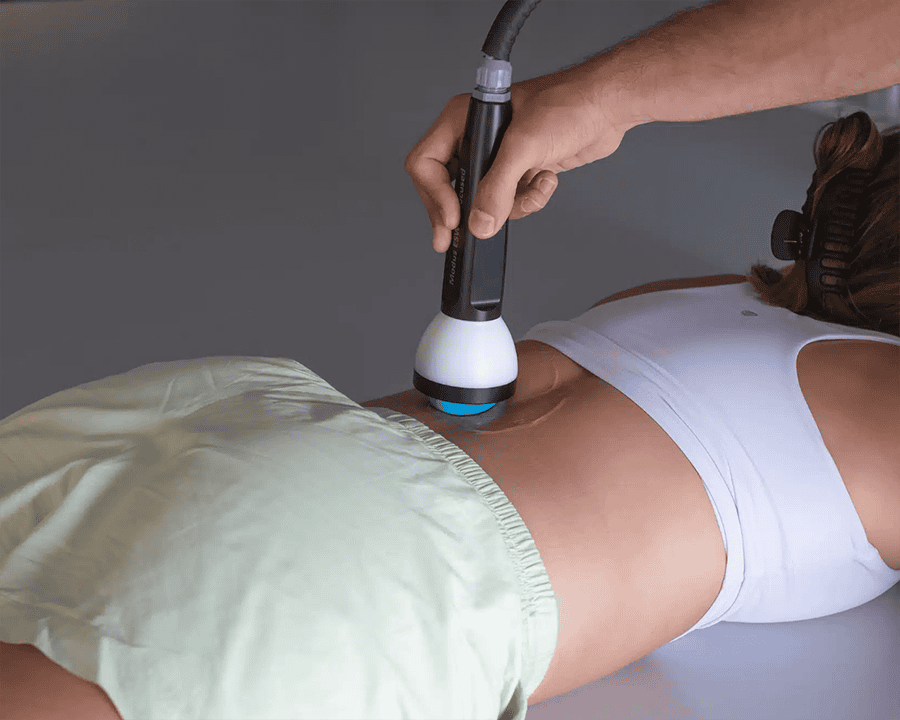
A session is straightforward. You sit or lie down, depending on where the pain is, so loose clothing helps. Your therapist presses around the area to find the most tender spots. Then they apply a layer of gel, which helps the waves travel into the tissue.
From there, a handheld applicator moves over your skin, and you’ll feel a steady, rhythmic tapping. Over a very sore spot it can be uncomfortable, and the intensity can be turned down whenever you need. There’s no recovery period, so most people head straight back to work or errands afterward.
Conditions Stem Wave Therapy Is Commonly Used For
Acoustic wave therapy has been studied most for soft tissue problems that haven’t improved with standard care, including:
- Plantar fasciitis and heel pain
- Tennis elbow, Achilles tendon pain, patellar tendon pain (jumper’s knee), and shoulder tendon problems
- Muscle tightness and strains that keep coming back
- Knee pain, including discomfort related to osteoarthritis
- Low back and hip pain with a muscular or soft tissue component
The evidence isn’t equally strong for all of these. Plantar fasciitis and certain tendon conditions have the most research behind them, while other uses are still being studied. A good evaluation should tell you honestly where your condition falls.
Who Is a Good Candidate for Stem Wave Therapy?
According to Dr. Patel, StemWave is generally appropriate for adults over the age of 18. He does rule it out in several situations. StemWave is not the right option if you:
- Are actively undergoing cancer treatment
- Take a blood thinner
- Are actively using nonsteroidal anti-inflammatory drugs (NSAIDs), such as Advil or Motrin
- Have had a cortisone injection within the past 30 days
- Have a pacemaker or an implanted defibrillator
If one of these applies to you, start with a conversation with a physician before going any further. Please don’t stop a prescribed medication on your own to qualify for treatment.
Why a Cardiologist Supervises StemWave at AvaOne
Blood thinners, pacemakers, and defibrillators all appear on that list, and they’re everyday territory for a cardiologist. Plenty of adults dealing with joint or tendon pain are also managing a heart condition, sometimes without thinking of the two as connected.
At AvaOne, StemWave Therapy is delivered by Vanisha Patel, StemWave Therapist and Lifestyle Coach, under the supervision of Chirag D. Patel, MD, FACC, FSCAI, RPVI, board-certified interventional cardiologist. Dr. Patel notes that StemWave itself has minimal cardiac effects. The benefit of having a cardiologist involved comes earlier, at screening, when someone needs to know exactly which patients should be treated and which should not.
Realistic Expectations: What StemWave Can and Can’t Do
The misconception Dr. Patel hears most often is that pain will improve after one treatment. For most people, it doesn’t. Some notice a difference within the first few visits, while others improve more slowly over the full course.
He is just as clear that StemWave isn’t meant to work alone
“We want to emphasize that this is an adjunctive therapy to the patient’s current pain management plan, which includes physical therapy, nutrition, and sleep hygiene.”
- Chirag D. Patel, MD, FACC, FSCAI, RPVI
Dr. Patel has been on the patient side of this treatment as well.
Does Stem Wave Therapy Hurt? Side Effects to Know
Most people describe the treatment as firm tapping, uncomfortable at times over tender spots but rarely painful. Afterward, you might notice:
- Soreness or tenderness in the treated area
- Mild redness or swelling
- Occasional bruising
- Brief tingling or numbness
These usually fade within a day or two. Your therapist will go over aftercare with you, which typically means staying hydrated and taking it easy on strenuous activity for a short period. Since NSAIDs like Advil and Motrin are off the table during treatment, ask your care team what you can use if you feel sore between sessions.
StemWave, Shockwave, and Other Options: How They Compare
Patients often ask where StemWave fits among treatments they already know.
Traditional shockwave therapy (ESWT) works on the same principle of acoustic energy and has decades of research behind it. StemWave sits within that broader category.
PRP and other injections also aim to support healing, but they involve needles and, in the case of PRP, a blood draw. StemWave stays entirely on the outside of the body.
Physical therapy remains the backbone of most recovery plans, and StemWave is designed to work alongside it.
Surgery is the right answer for some injuries. For people who want to explore non-surgical options first, StemWave is worth discussing once a proper evaluation has been done.
A Physician’s Perspective
Dr. Patel has been on the patient side of this treatment as well.
One person’s experience isn’t a guarantee, and results vary from patient to patient. Still, it’s useful context: the physician who screens AvaOne’s StemWave patients has experienced the treatment himself.
“I’ve used StemWave myself on my shoulder and have noticed significant improvement.”
- Chirag D. Patel, MD, FACC, FSCAI, RPVI
Getting Started With StemWave at AvaOne
The first step is a complimentary 15-minute discovery assessment by phone or video, whichever you prefer. On that call, we talk through your pain, your history, your current medications, and whether StemWave makes sense for you.
If it looks like a good fit, your first in-person visit is a mapping assessment. Your therapist pinpoints the areas driving your pain and builds your treatment plan. From there, progress is reviewed as your sessions go on.
If you’re comparing options and searching for stem wave therapy near me, ask any clinic three things:
- Is a physician involved in screening?
- How do they decide who is a good candidate?
- What happens if you aren’t improving?
AvaOne is a self-pay practice. Please review our Self-Pay Practice Notice for eligibility details before scheduling.
Frequently Asked Questions
Is stem wave therapy the same as stem cell therapy?
No, they are completely different treatments. Stem wave therapy is a form of acoustic wave therapy that sends sound wave pulses through the skin to improve blood flow to inflamed tissue, which helps relieve pain. Nothing is injected, and no cells are collected or transplanted. Stem cell therapy involves injection-based procedures. If you are considering either one, ask the provider to explain exactly what the treatment involves before you begin.
Will stem wave therapy work after one session?
Usually not. Expecting relief after a single treatment is one of the most common misconceptions about StemWave. The body responds gradually, so treatment is delivered over several sessions spread across a few weeks. Some patients notice changes early, while others improve more slowly. StemWave is also an adjunctive therapy, meaning it works best alongside an existing pain management plan that includes physical therapy, good nutrition, and healthy sleep habits.
Who is a good candidate for stem wave therapy?
Stem wave therapy is generally appropriate for adults over 18 with soft tissue pain such as plantar fasciitis, tendon pain, or recurring muscle strains. It is not recommended for people in active cancer treatment, people taking blood thinners, or people actively using NSAIDs such as Advil or Motrin. It is also not recommended after a cortisone injection within the past 30 days, or for anyone with a pacemaker or implanted defibrillator. A physician screening confirms whether treatment is safe for you.
About the Medical Reviewer
Chirag D. Patel, MD, FACC, FSCAI, RPVI. Chirag D. Patel is board-certified in interventional cardiology, general cardiology, internal medicine, and echocardiography. He has been recognized as a top interventional cardiologist from 2022 through 2025 and leads the AvaOne Vitality Program, the practice’s flagship preventive longevity membership. His clinical focus is preventive cardiology, advanced cardiovascular risk stratification, and integrated lifestyle medicine for adults who want a proactive, physician-led approach to long-term heart health.